Ayahuasca tourism and the question nobody wants to answer
Something has shifted MASSIVELY in the last 1-2 decades. Ayahuasca, once a deeply guarded practice within Amazonian Indigenous communities, has become a global industry. Retreat centres have multiplied from virtually none in the year 2000 to over 230 in 2019 - and that number has kept climbing.
We're not here to demonise that because we've seen the medicine change lives. It's part of why we do what we do. But we'd be doing our community a disservice if we didn't look honestly at what that demand is doing to the people and traditions that have held this medicine for millennia.
What's actually happening
Aili Pyhälä, co-director of the World Ayahuasca Forum and a socio-environmental scientist who has spent decades working with Amazonian communities, describes the change as exponential. When she first arrived in Iquitos in 2000, ayahuasca wasn't even spoken about openly and it certainly wasn't advertised. Today it's a marketing category!
The core tension is this: in traditional Amazonian communities, ayahuasca has never been a commodity. Payment to a healer was in service to the community - in relationship and in reciprocity. The medicine was held as sacred, with a spirit that, in the traditional view, cannot and should not be profited from. Some healers deep in the jungle still refuse payment on exactly those grounds.
But the global market economy doesn't care about that worldview. And as tourism infrastructure expands - bringing roads, development, and financial pressure into Indigenous territories - communities are increasingly forced to participate in it just to survive. The result is what two Indigenous women recently described in The Guardian as a fraying of traditional values. Younger generations are learning to value ayahuasca for its earning potential. The collective role of the healer - maintaining balance within community, between people, between humans and the forest -is quietly being replaced by a transactional one.
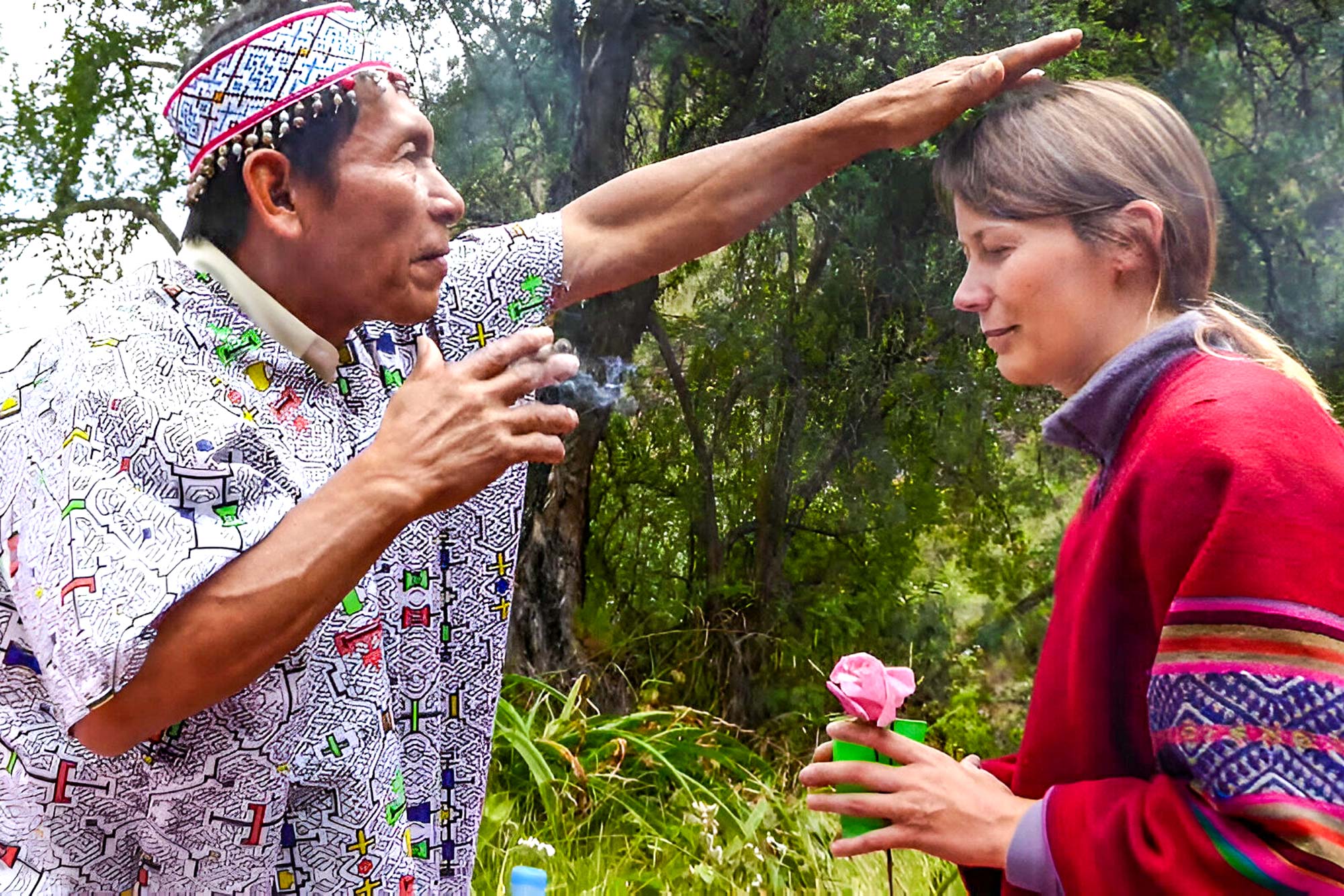
The problem gets sharper when you look at who is actually holding ceremonies. In traditions like the Siona, Cofan or Shipibo, a curandero trains for decades. They enter strict diets and isolation - sometimes months or years at a time - to come into real communion with the plant. That depth of training is what makes the work safe and meaningful. But in an unregulated industry, that standard is invisible to the average Western participant. And as Aili puts it, it doesn't take much to fool someone new: learn to brew, set up a space, memorise a few icaros. The consequences of that negligence range from shallow, ineffective experiences to genuine harm - including reported cases of financial and sexual abuse by people claiming healer status.
Meanwhile, the communities who hold authentic lineages face a different trap. If Western demand brings more people to the Amazon, the ecological and cultural pressure intensifies. If Indigenous healers travel out to share the medicine globally, villages risk losing the very people responsible for holding community health. Every available path carries a real cost.
Where we stand, and what we think helps
At Taozen, we sit with this tension too. We're certainly not above it, and try our best to navigate it. We've made commitments - we only work with native wisdom keepers who genuinely respect and preserve their traditions - but in our opinion, commitments are the floor...not the ceiling. The question we keep asking ourselves is what structural change actually looks like. Here are the approaches we've pondered on and believe are worth taking seriously.
1. Transparent, direct revenue sharing with source communities. Every organisation working with this medicine should be paying a meaningful percentage of revenue - something in the range of 15–20% - directly to the originating Indigenous communities, with no intermediaries controlling the flow. Not to NGOs or cultural foundations with boards of Westerners deciding how it's spent. Directly, with communities governing its use. Publishing those numbers publicly creates accountability and raises the bar for everyone else operating in this space.
2. Healers as governing partners (not vendors). The standard model puts the Western retreat organisation in control - of marketing, of pricing, of how the ceremony is described and contextualised. The healer is brought in as a service provider and that structure needs to be inverted. Real partnerships give healers contractual veto power over how their practice is presented, named, and sold. If we're genuinely committed to sovereignty, it starts there, surely?
3. Rotational systems that protect community healing. One of the most under-discussed problems is the drain of healers out of their home communities. A working model designates a small number of healers as external ambassadors on rotation - six months working externally, eighteen months home. Retreat organisations that are serious about this commit to those limits contractually, even when demand from their side would push for more. Scarcity in this context is therefore a feature and a safeguard for so many elements of the community and medicine.
4. Credentialing that originates from within. Western certification systems for facilitators are proliferating fast, and most of them are built and governed by Westerners. A more honest system is one where Indigenous communities themselves build and maintain a verifiable lineage registry - documenting who has trained, under whom, and for how long - and organisations like ours commit to working exclusively with people on that list. Authentication power should belong to the source, and only to the source. They are, after all, the ones that have kept this in line for hundreds - if not thousands - of years.
5. Making cultural education a mandatory prerequisite. People who understand what's actually at stake (eg the land rights battles, the legal precarity, the living traditions being pressured from every side etc) tend to show up differently. They become long-term advocates and allies rather than one-time consumers. Weaving that education into preparation, as a requirement rather than a optional or brushed-over supplement, changes the relationship between participants and the medicine from the start.
Now...let's be super clear. None of this is simple. We're not going to pretend that any single organisation adopting these practices solves the structural problem of a global industry meeting traditional culture at speed. But the alternative - continuing to talk about ethics while the actual structures remain unchanged - serves no one, least of all the communities whose knowledge makes all of this possible.
The conversation is urgent, to say the least, and we're committed to being part of it honestly.