
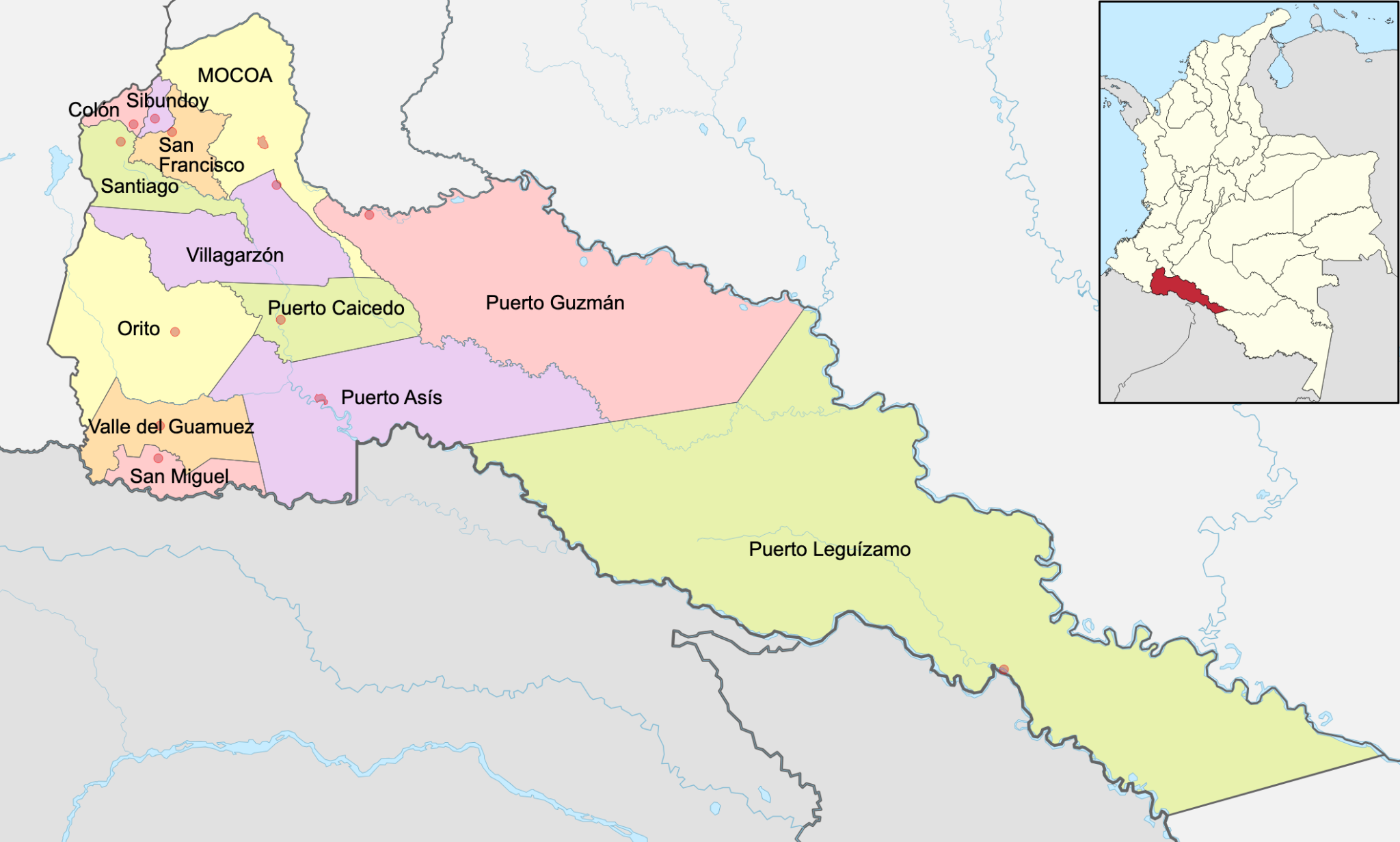
The Siona indigenous people, who call themselves Zio Bain (“the people of the chagra”), live primarily in the department of Putumayo, in the municipalities of Puerto Asís and Puerto Leguízamo, along the banks of the Putumayo, Piñuña Blanco, and Cuehembí rivers, in a region bordering Ecuador. Their social organization is based on the nuclear family and the political structure of the cabildo (community council), while their economic and cultural life revolves around traditional agricultural activities and the chagra system, which is a central element of their worldview.
The chagra system is a traditional indigenous agroforestry system, primarily cultivated by women for food security, biodiversity conservation, and spiritual connection to the land. It is a rotating, sustainable agriculture method, often called a "farming plot" or "garden," that works with the rainforest's natural cycles rather than against them. This is a traditional, sustainable, and biodiverse plot of land that serves as a cornerstone of Siona culture, providing food security (cassava, plantain, fruit trees) and medicinal plants. It is also a sacred space for important knowledge transfer between generations.
Today, out of the 2,575 Siona people, only seven people speak the native Siona language. Of these, just two people can read and write it, while the remaining four preserve it solely through oral tradition. Without immediate, community-based educational spaces, this millennial culture - and the sacred wisdom it carries - risks going extinct very soon.
In 2024, the Siona elders took a decisive step forward by establishing a Foundation with a clear vision: to create a mobile-school for the protection, teaching, and transmission of the Siona language, traditional dances, ancestral knowledge, and different cultural practices. Today, the Siona elders are asking for support to make this vision a reality.
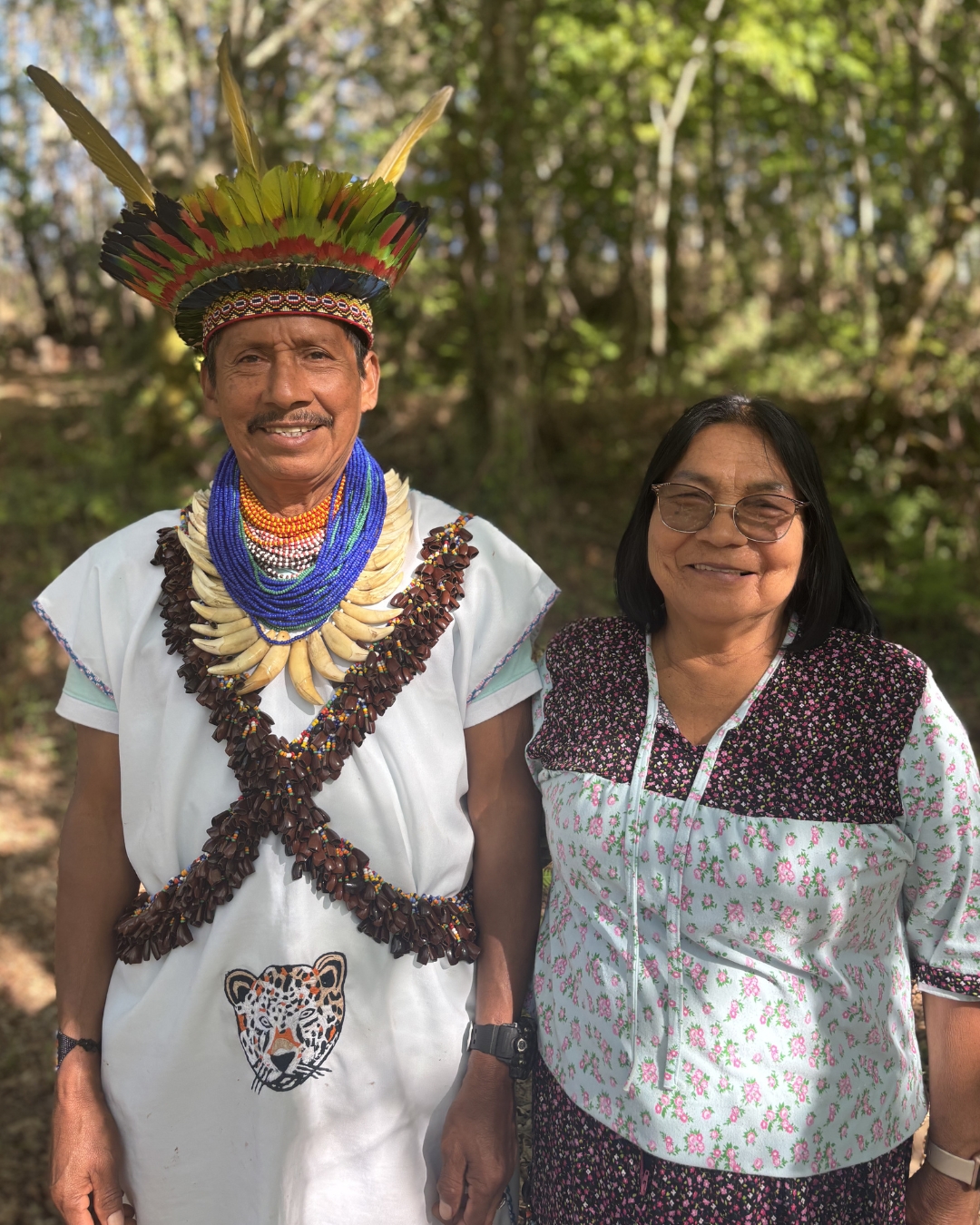
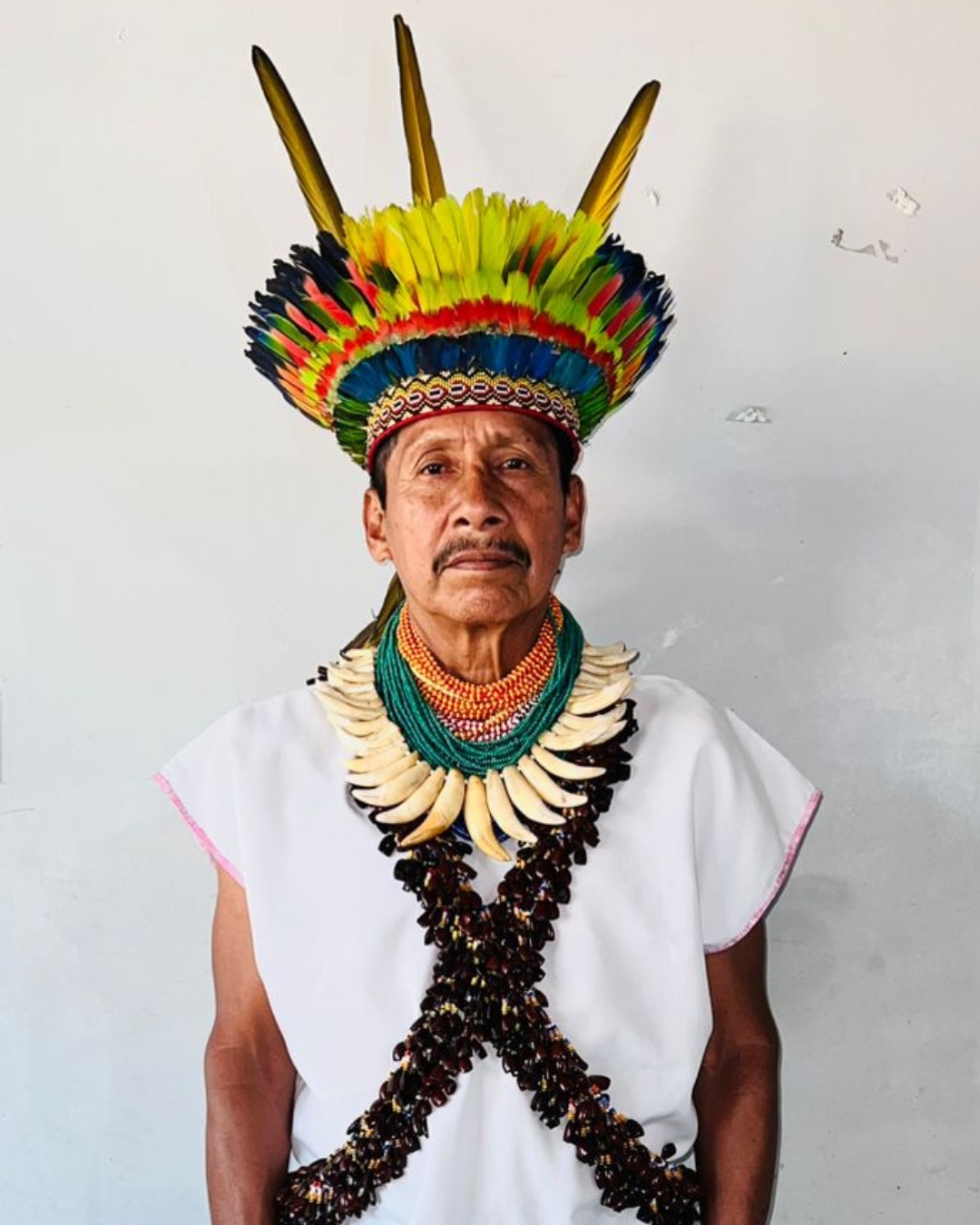
In response to this call for support, we’re joining forces with our beloved Taita Victoriano Piaguaje Yaiguaje. He is one of the two remaining elders that can read and speak the Siona language, and the leader of the Siona school project (ECOYAI). Through our 22nd, 23rd and all future Taozen retreats with Victoriano, a portion of the proceeds will be allocated to the development of this educational and culutral initiative - ECOYAI.
ECOYAI is a Colombian organisation founded by Taita Victoriano Piaguaje Yaiguaje, a tenured bilingual teacher and traditional knowledge holder of the Siona people of Putumayo. Its mission is the preservation, revitalisation, and intergenerational transmission of the Siona language through a combination of community-led fieldwork, AI-assisted documentation, and on-the-ground education programs.
The organisation has operated entirely on volunteer intellectual and technical capital to date. Its core team spans linguistics, pedagogy, software development, and indigenous cultural oversight - all with direct ties to the Siona community.
ECOYAI's approach is built on a principle of community ownership: the knowledge belongs to the people who carry it. External technology serves that knowledge, not the other way around. The oral corpus, the recordings, the ancestral narratives - all remain the exclusive collective property of the Siona people. The organisation maintains a technical support role after project completion, but control sits with the community.
The name ECOYAI comes from two words in the Siona language. Ëco (pronounced uhs-coe) means yagé - the sacred medicinal plant at the heart of Siona healing tradition. Yai means jaguar - the apex spirit of the Amazon, guardian of the forest and its medicines.
At Taozen, we’re working to support indigenous-led efforts that helps ensure future generations receive ayahuasca from the hands of the ancient lineages, therefore preserving the authentic transmission of this ancestral knowledge.
But this is not just about ayahuasca. This goes much further. It is because the Siona language encodes a specific way of being in the world. The ecological relationships, spiritual practices, and ancestral narratives held in this language cannot be fully translated into Spanish, let alone reconstructed once the last fluent speakers are gone. That loss is permanent.
This also has a direct consequence for modern medicine. The Siona people have accumulated thousands of years of intimate knowledge of Amazonian plants - their properties, interactions, preparation methods, and therapeutic applications across a vast range of physical and psychological conditions. Much of this pharmacological knowledge exists only in the language itself: in the specific terms, stories, and oral instructions passed between generations. Many plants have names that are only known in Siona, not even in Spanish. Ethnobotanists and medical researchers have barely scratched the surface of what this tradition contains. Losing the language forecloses possibilities for the rest of humanity, including treatments for conditions that Western medicine is still struggling to address.
ECOYAI has the community relationships, the methodology, and the leadership to do this work properly. What the project needs is funding, and it needs it while the window is still open.
The total budget is $425,000, but Phase 1 - the urgent fieldwork, the recordings, and the relationships with knowledge holders that make everything else possible - can begin the moment resources ($69,000) are secured. The full phase plan is as follows:
Fieldwork in Siona territories. Recording sessions with knowledge holders capturing vocabulary, stories, ancestral narratives, and medicinal oral instructions that have never been written down. Every record collected becomes the permanent, collective property of the Siona people. This has to happen before the elders die otherwise the window of opportunity will be lost.
A machine learning model trained on the corpus, capable of transcription and translation for a language with no existing digital infrastructure. Built by ECOYAI's software team, with the corpus data remaining exclusively owned by the Siona community. Development will be prioritised on local, open-source AI models to reduce dependency and data-sharing on Big Tech platform where possible.
A learning and translation tool designed with and for the Siona community - built for offline use in remote reserves, with interface and content developed directly alongside young Siona people.
Deployment across all Siona reserves. Ten bilingual community teachers trained and certified. The itinerant school model - teachers living and rotating in each reserve for 15-day immersion cycles - operating at full capacity.
The combination of community-led documentation, AI-assisted preservation, and intergenerational training programs will also be designed from the ground up to be replicable.
There are thousands of endangered languages across the Amazon Basin and beyond, many facing identical pressures and the same shrinking timeline. The difference between saving a language and losing it is often simply a question of whether a working model exists and whether resources arrive in time.
A successful Siona model becomes a tested blueprint - one that other communities, organizations, and funders can adopt and adapt without starting from zero.
A single donation therefore, in this context, has a reach that extends well beyond one language or one people.
If you have ever sat with yagé, experienced a plant medicine ceremony, or felt the intelligence of an Amazonian healing tradition working through you - some of what you received came from knowledge the Siona people developed and refined over thousands of years. The preparation methods, the plant combinations, the protocols for working safely with these medicines and so much more...none of that emerged from a laboratory. It came from generations of practitioners speaking to each other in a language that only five people can now fully write.
Supporting Phase 1 means that knowledge continues to exist in a form that can be transmitted, studied, and applied. The medicinal plant properties documented in this corpus will be available to ethnobotanists, medical researchers, and healers working with these traditions for generations to come. The protocols, the stories, the preparation instructions - preserved, owned by the community, and accessible.
As an example, to kick off Phase 1 (the most important):
Phase 1 budget: $69,000
- 5 donors = $13,800 each
- 10 donors = $6,900 each
- 20 donors = $3,450 each
- 30 donors = $2,300 each
Ten donors at $6,900 each starts this. That's less than the cost of most week-long retreats, and it funds something those retreats were built on.
Victoriano is nearly 70, as is the other abuelo with this wisdom. If we are to succeed, we must act fast before it's too late.
If you'd like to donate or support in any way, you can do so in one of two ways:
1. Donate via our GoFundMe page - although we'll miss out on 2.9% of your donation due to GoFundMe platform fees.
2. Reach out to us at hello@taozenfamily.com with the subject line: 'Donating to ECOYAI Project' - that way we can recieve 100% of your donation via a simple bank transfer!
.jpg)
